
Keywords
Primary Health Care
Health Policy Working Conditions
How to Cite
Abstract
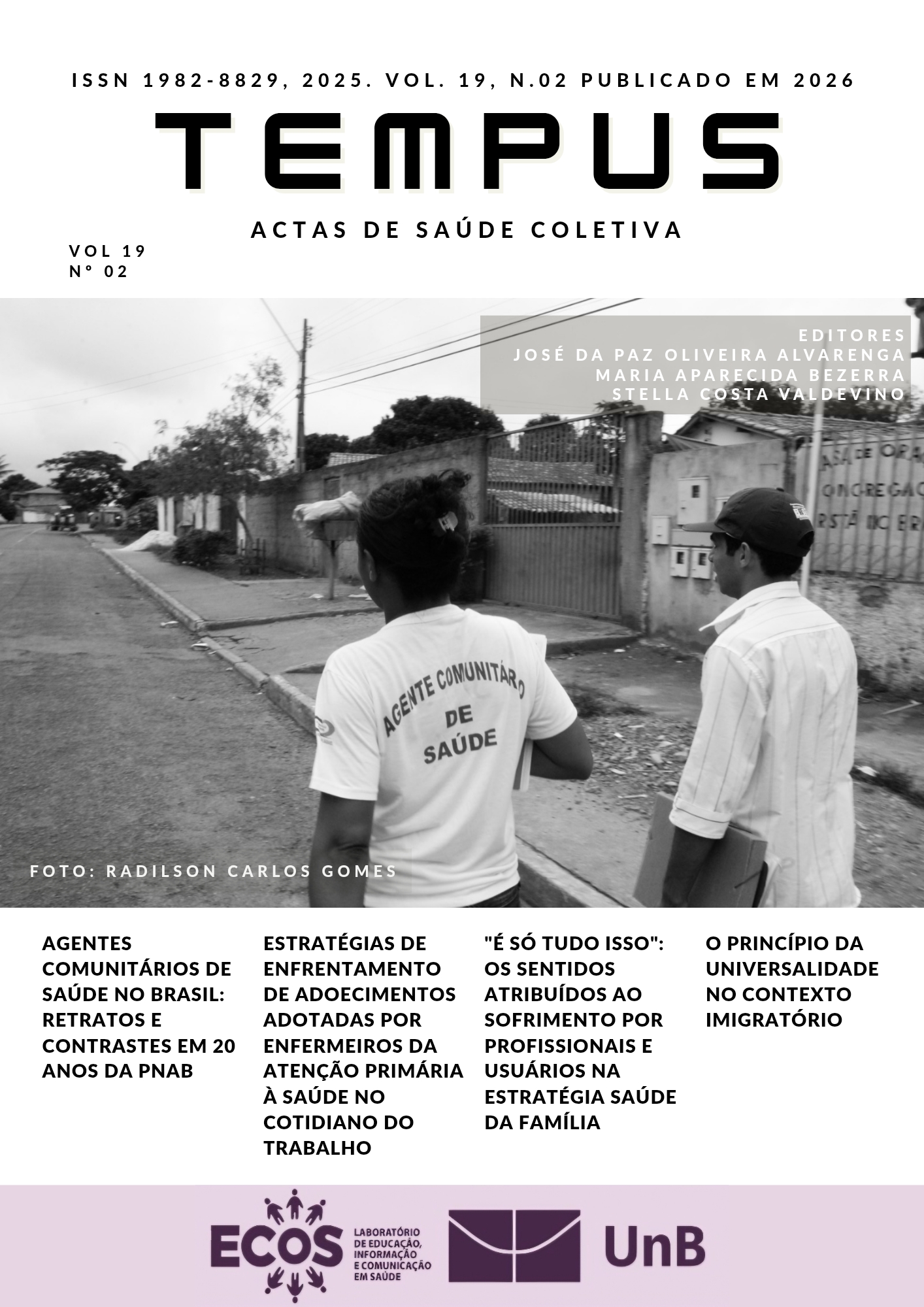
This article analyzes the sociodemographic profile, training processes, and working conditions of Community Health Workers (CHW) in Brazil, based on data from a national survey with 7,435 participants, in light of the 20 years of the National Primary Health Care Policy (PNAB). The results reveal the predominance of women, mostly Black, with high school education, residing in the territories where they work. Regional disparities and structural limitations were identified, including the limited offer of technical training and the lack of permanent education initiatives. The findings also highlight contemporary challenges such as tackling health misinformation. It is concluded that valuing CHWs, expanding their training, and ensuring decent working conditions are essential for strengthening Primary Health Care within the Brazilian Unified Health System (SUS).

This work is licensed under a Creative Commons Attribution 4.0 International License.
Copyright (c) 2025 Tempus – Actas de Saúde Coletiva ISSN 1982-8829